If you're looking to start a structural engineering project or would like a team of structural engineering consultants to support you, Shire is here to help.
Retaining Wall Anchors: How They Work and When Your Wall Needs Them
Retaining walls hold back tonnes of soil year after year, and most go unnoticed until a crack appears or the wall starts to lean. The good news is that a struggling wall doesn’t always need to be rebuilt.
November 2, 2026
Most retaining walls go unnoticed for years. They hold back tonnes of soil through wet winters and dry summers, and nobody gives them a second thought until a crack appears or the wall starts to lean. By then, the pressure behind the wall has usually become more than it can handle on its own.
The good news is that a struggling wall doesn't always need to come down. Retaining wall anchors can often stabilise it where it stands, with far less disruption than a rebuild. Below, we explain how they work, the types we use, the warning signs to look for, and what happens when our engineers take on an anchoring project.
What Are Retaining Wall Anchors?
Put simply, a retaining wall anchor ties the wall back into firm ground behind it. You may also hear them called ground anchors, tie-back anchors or earth anchors.
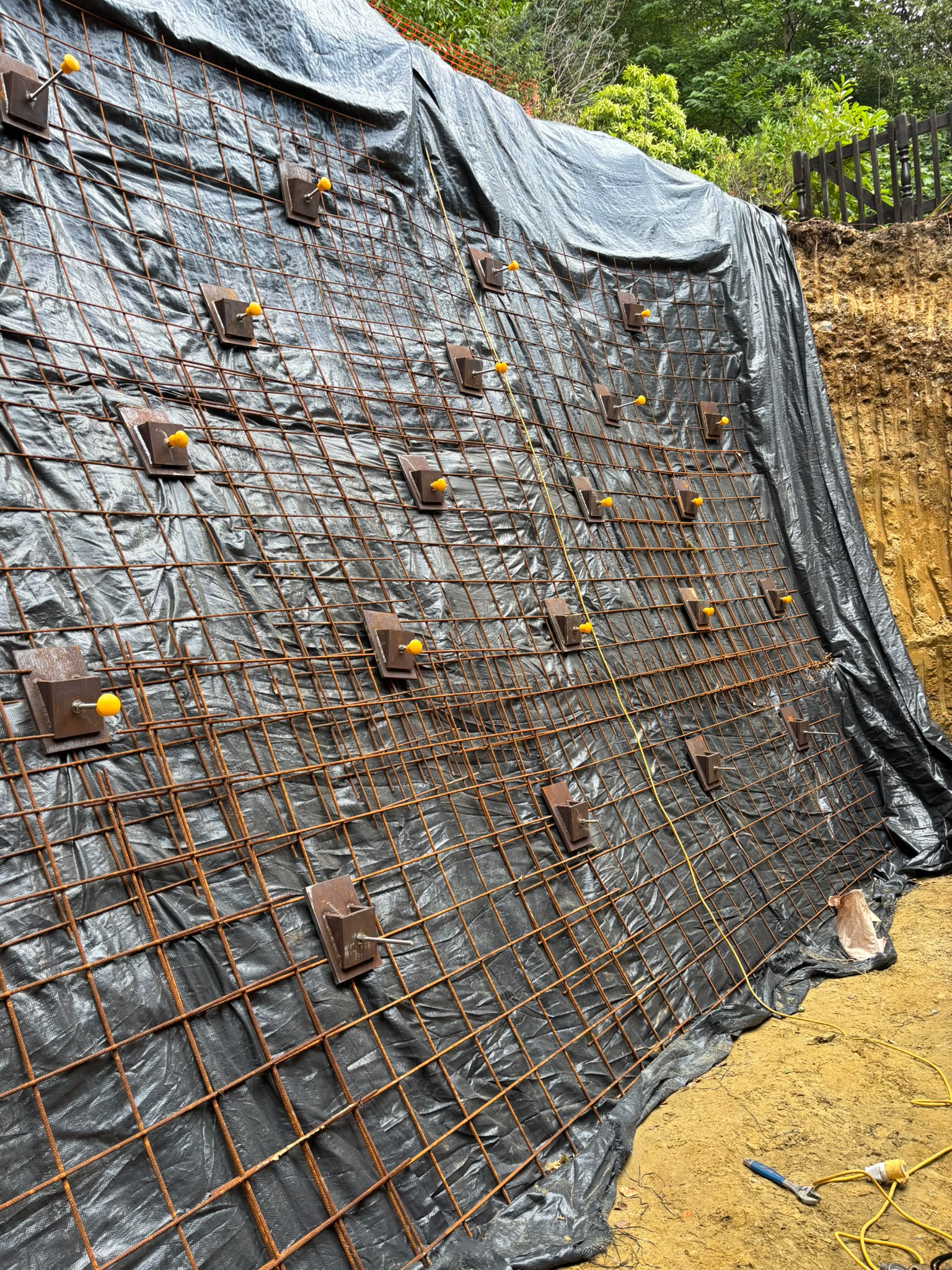
Each anchor runs through or behind the wall, past the soil that's likely to move, and into stable soil or rock further back. The load that was pushing the wall forward is carried along the anchor and into that stable ground. The wall no longer relies only on its own weight and strength to hold the soil back, because it's now being held in place.
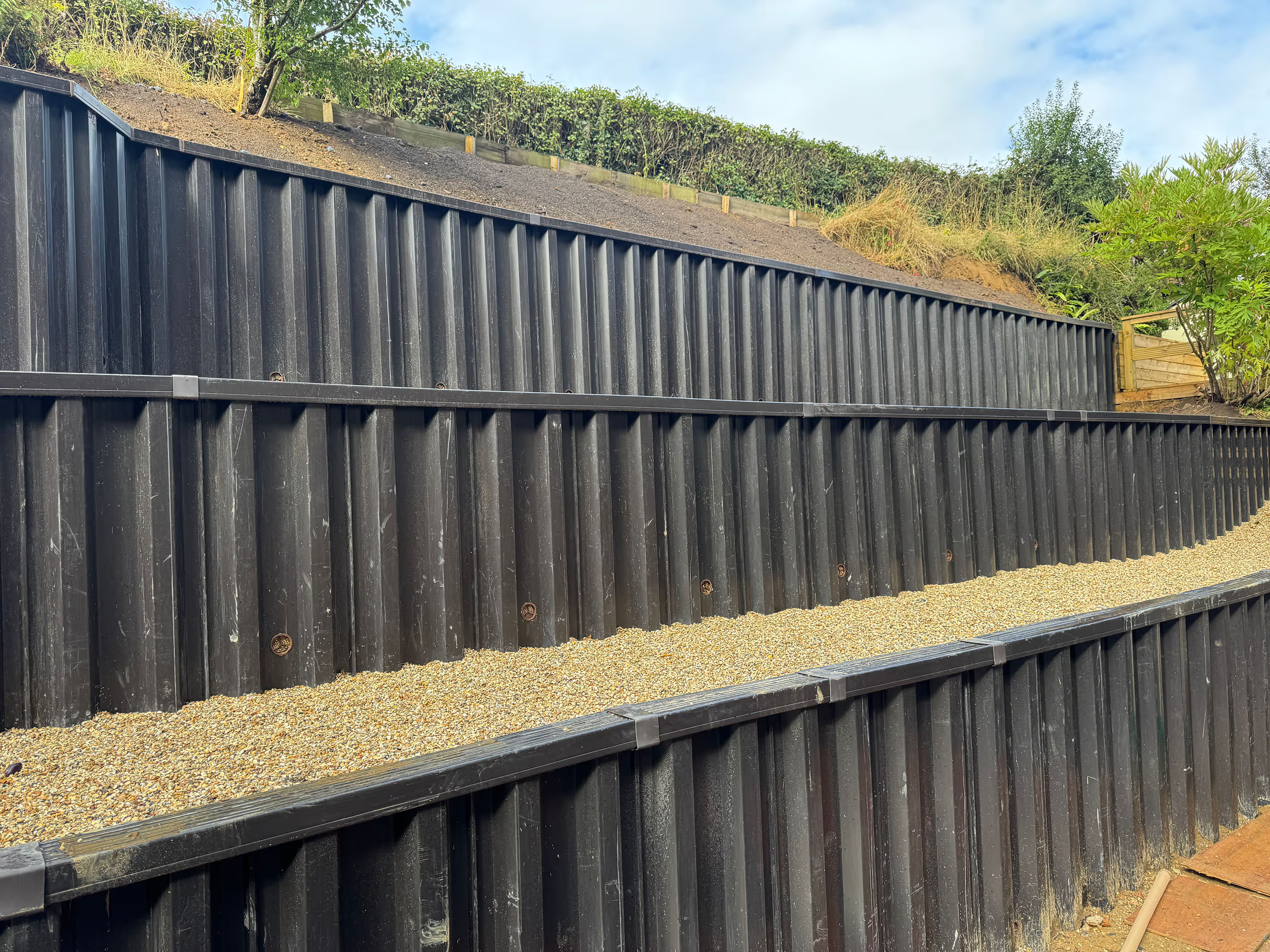
That's why anchors work so well on existing walls that are starting to show signs of distress. They're also used on new walls, including sheet piled installations.
How Do Retaining Wall Anchors Work?
Soil doesn't just sit behind a retaining wall. It pushes against it sideways, and engineers call this lateral earth pressure. The taller the wall, the greater the pressure. It gets worse when the ground is waterlogged, or when there's extra weight near the top of the wall, such as a driveway, parked cars or a building.
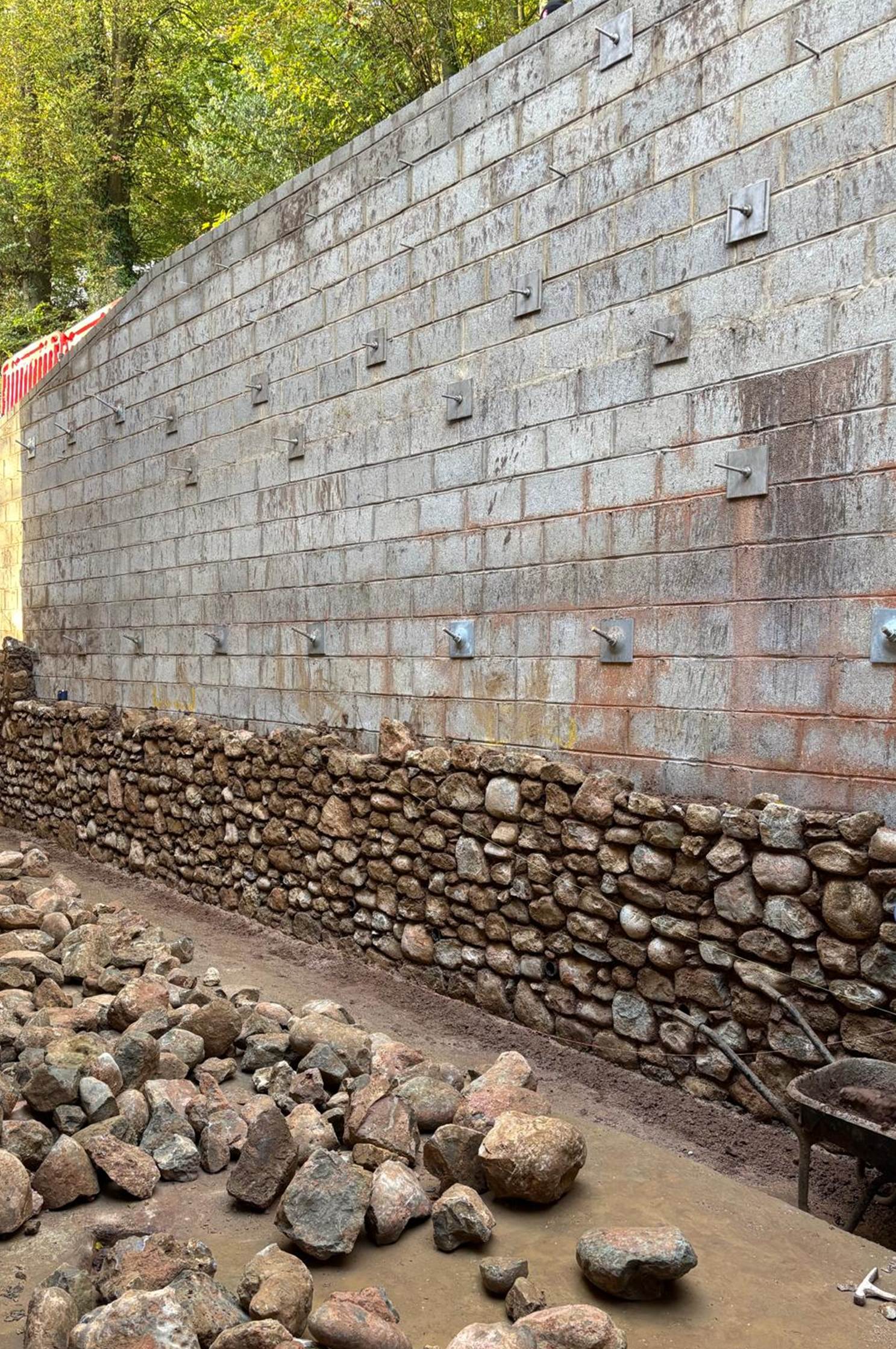
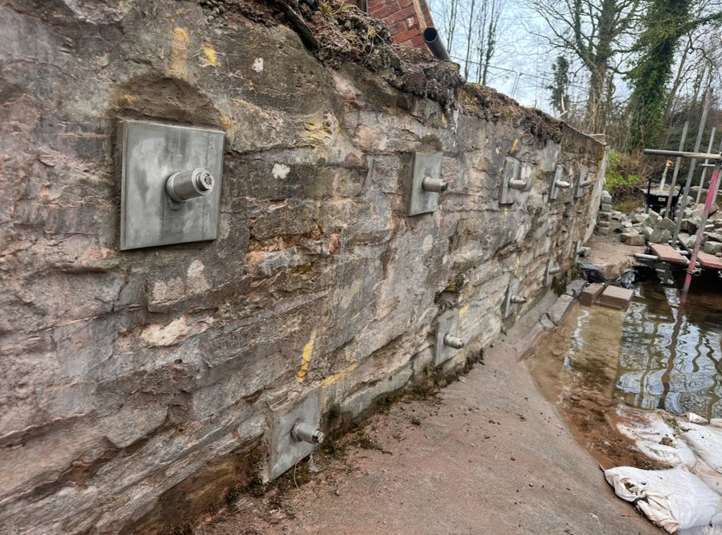
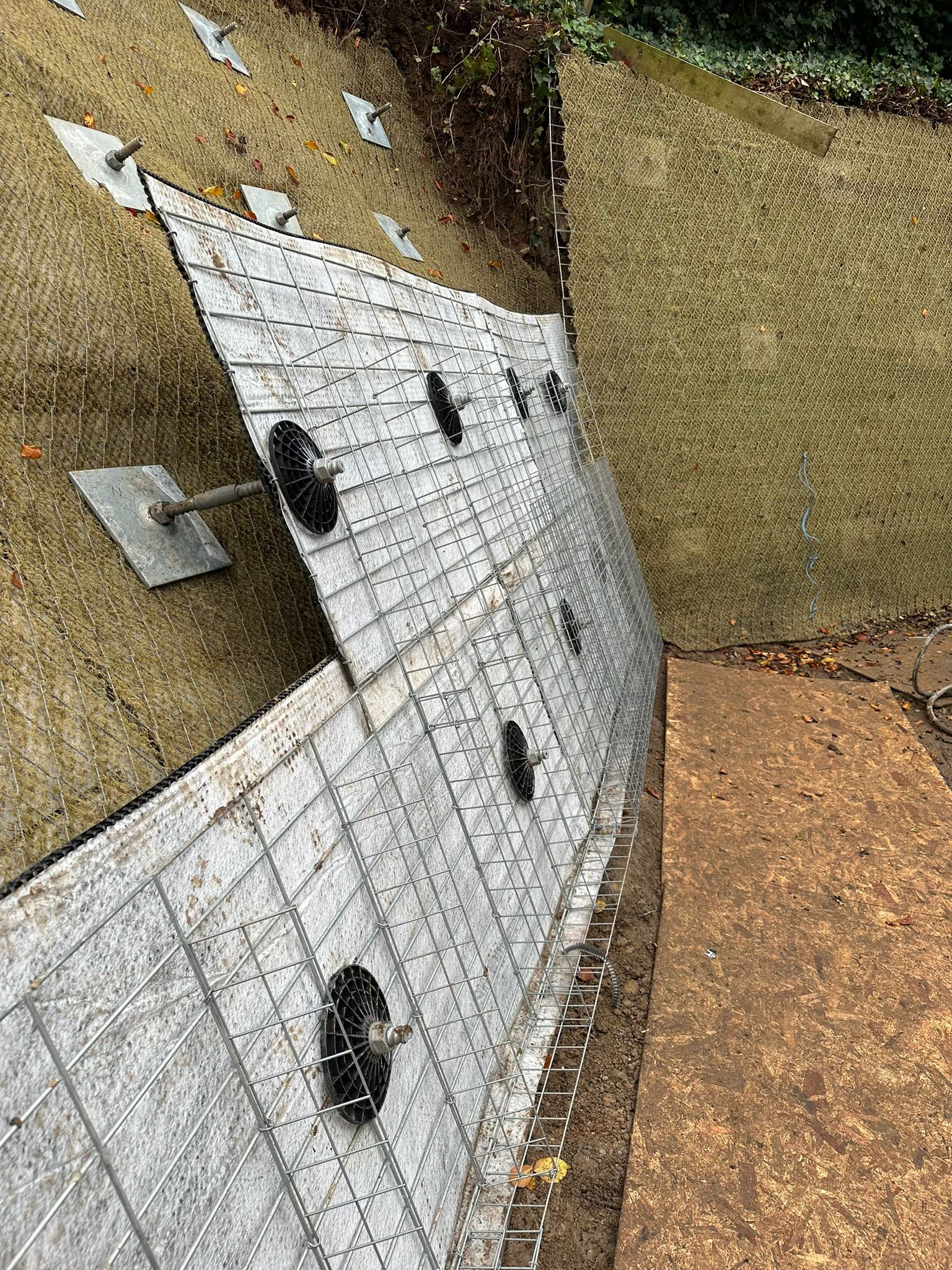
An anchor resists that push by working in tension, a bit like a guy rope on a tent. A typical grouted anchor is made up of three parts. The anchor head sits on the face of the wall and spreads the load into it through a bearing plate or a steel or concrete walling beam. Behind that is the free length, which passes through the ground that could move and is deliberately left unbonded. At the far end is the fixed length, bonded through mechanical friction or chemical means into firm ground.
Many anchors are also stressed, or pre-tensioned, once they're in. This means they start working straight away instead of waiting for the wall to move before they pick up any load, and it's a big part of why anchors are so good at stopping lateral movement in its tracks.
Signs Your Retaining Wall Needs Anchoring
Retaining walls rarely fail overnight. The trouble is that the early signs are easy to put down to age or weather. Keep an eye out for:
The wall tilting or leaning outwards
A bulge or bow along the face
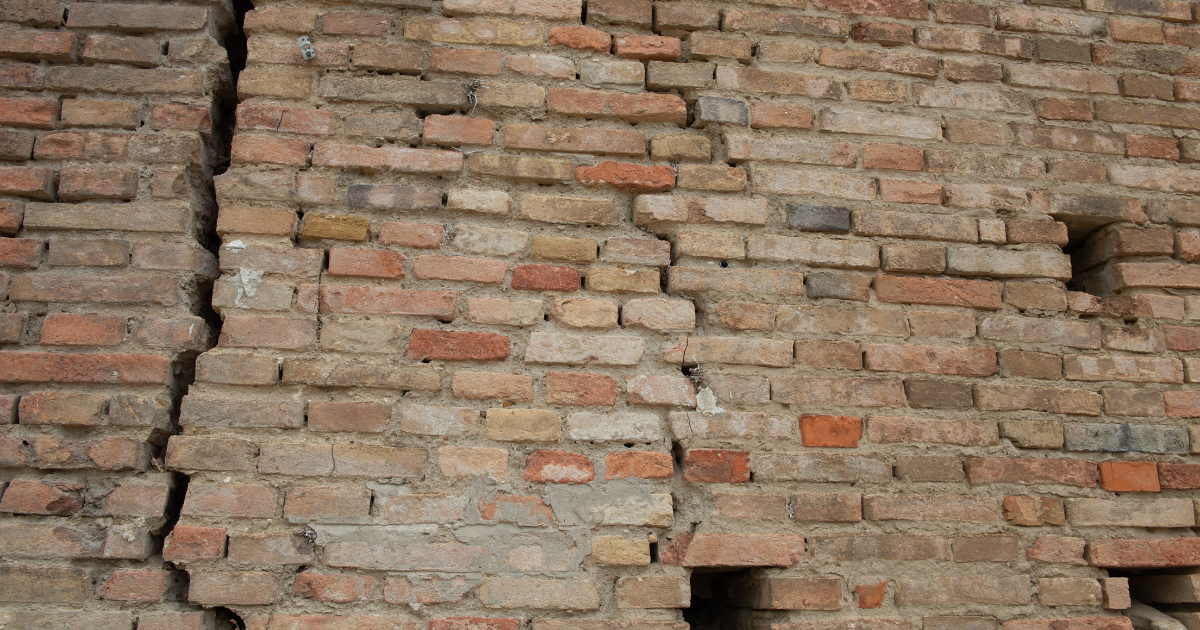
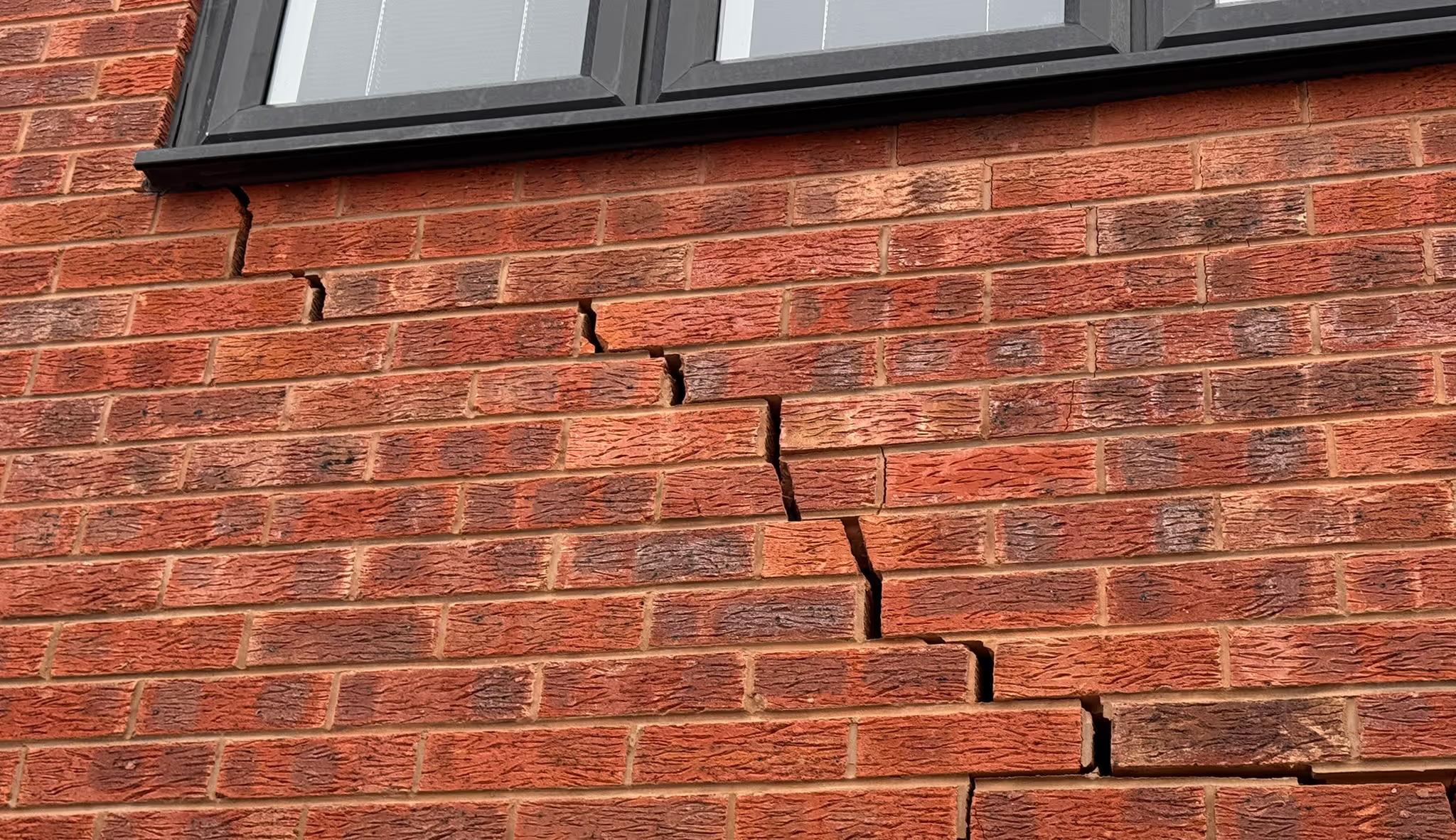
Horizontal or stepped cracks in the brickwork, blockwork or concrete
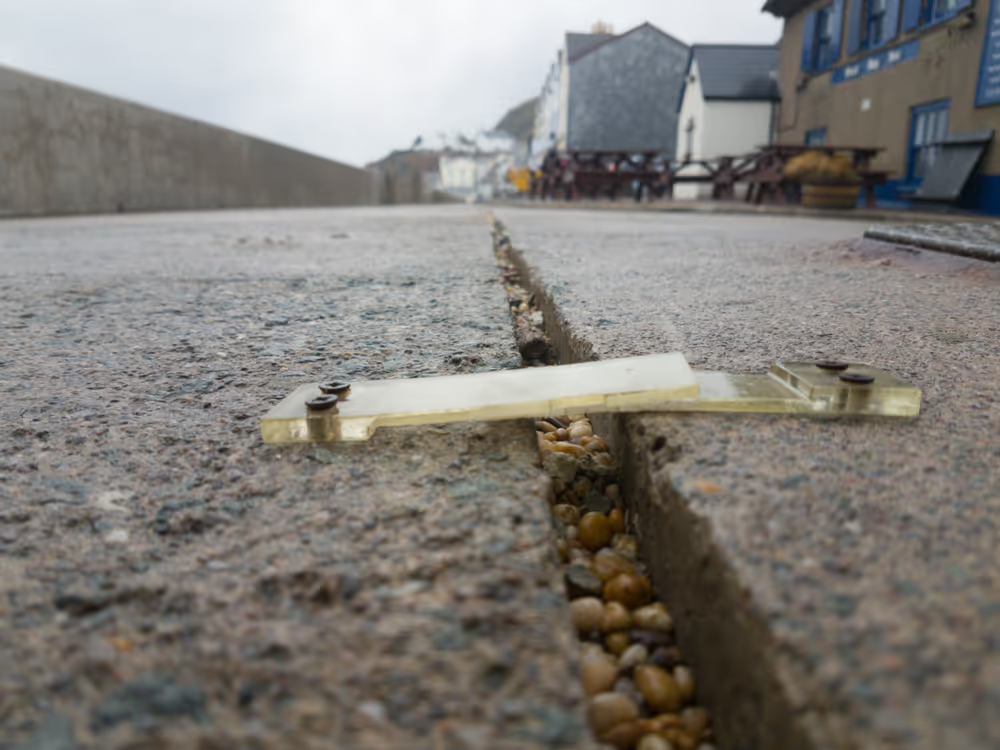
Gaps opening up at joints, or where the wall meets another structure
Cracks or dips in the ground behind the wall
Water seeping through the wall, or weep holes that stay dry after heavy rain
Fences, paths or buildings near the top of the wall starting to move
A leaning retaining wall is never something to wait and see about. Once movement starts, it often speeds up, and a collapse can damage property and put people in danger. If any of this sounds familiar, get the wall looked at by a qualified structural engineer sooner rather than later.
What Causes Retaining Wall Failure?
Anchors deal with the movement, but a lasting fix also means understanding what caused it. The usual culprits are:
Water. Poor drainage lets water build up behind the wall, and that extra pressure can overload it surprisingly quickly.
Extra weight at the top. Driveways, parked vehicles, extensions and piles of materials all add to the load.
The original design. Plenty of older walls were built without an engineer involved, or for conditions that have since changed.
Age and weather. Mortar weathers away, reinforcement corrodes, and frost gets into the joints, and all of it weakens the wall over time.
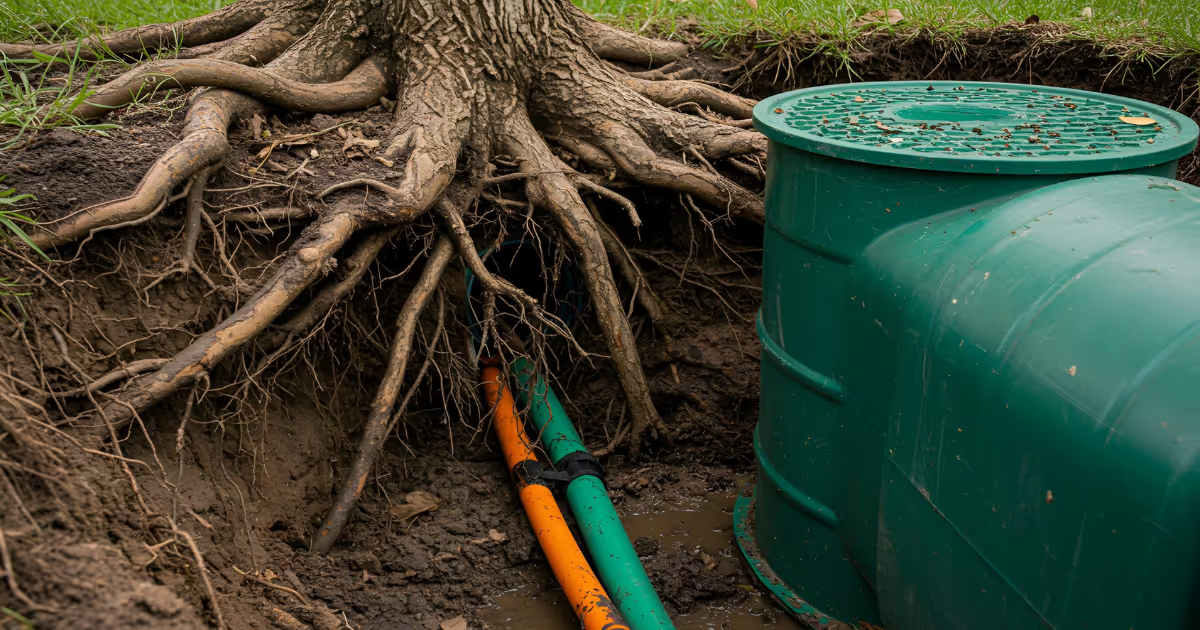
Trees and roots. Roots can push walls out of line and change how wet or dry the soil behind them gets.
Ground movement. A landslip, or soil softening behind the wall, can overwhelm a wall that had been perfectly stable.
Benefits of Ground Anchors for Retaining Walls
Rebuilding a retaining wall is a big job. The soil behind it usually has to be dug out, the old wall taken down, and a new one built in its place. That's expensive and disruptive, and next to houses, roads or boundaries it often isn't realistic at all.
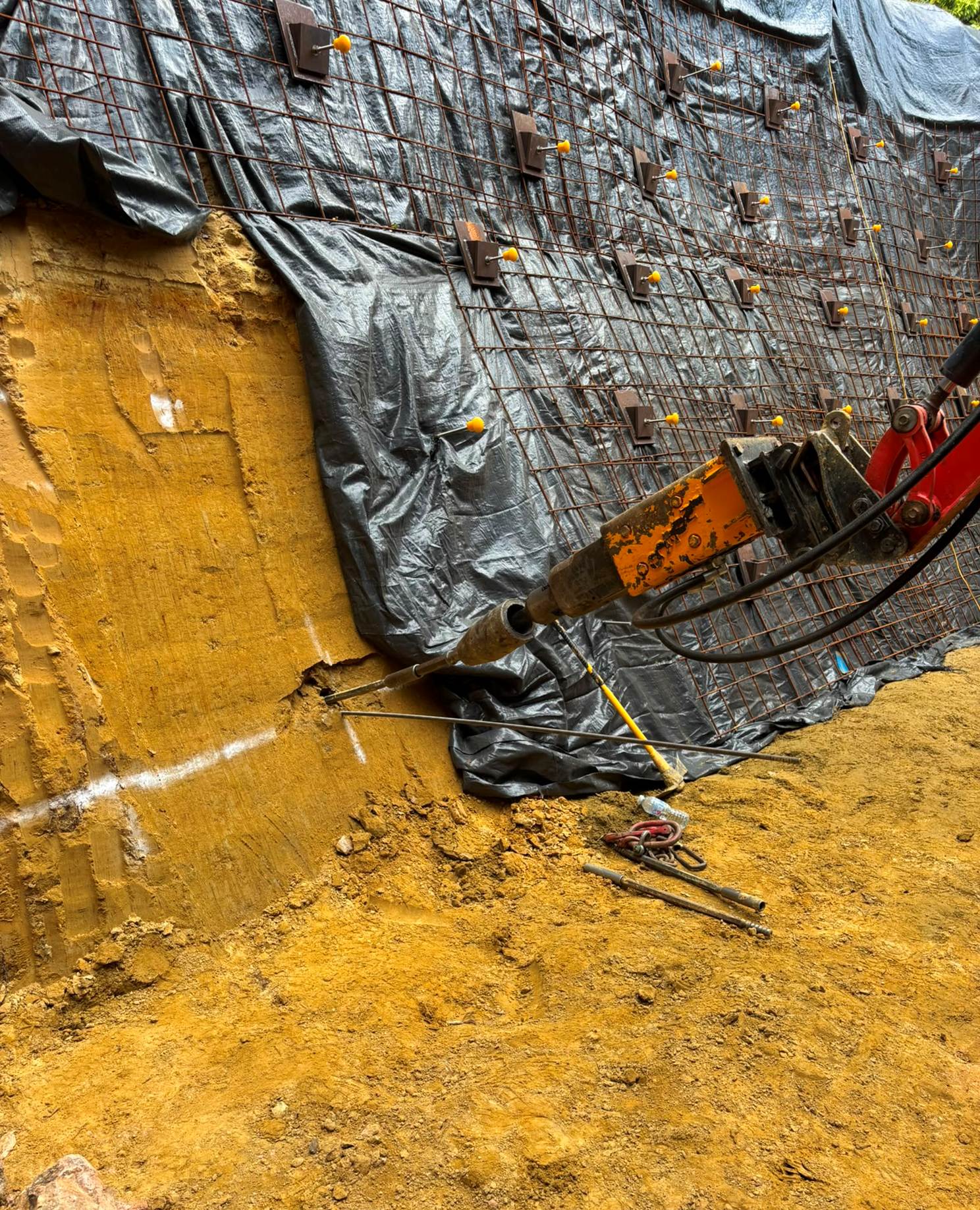
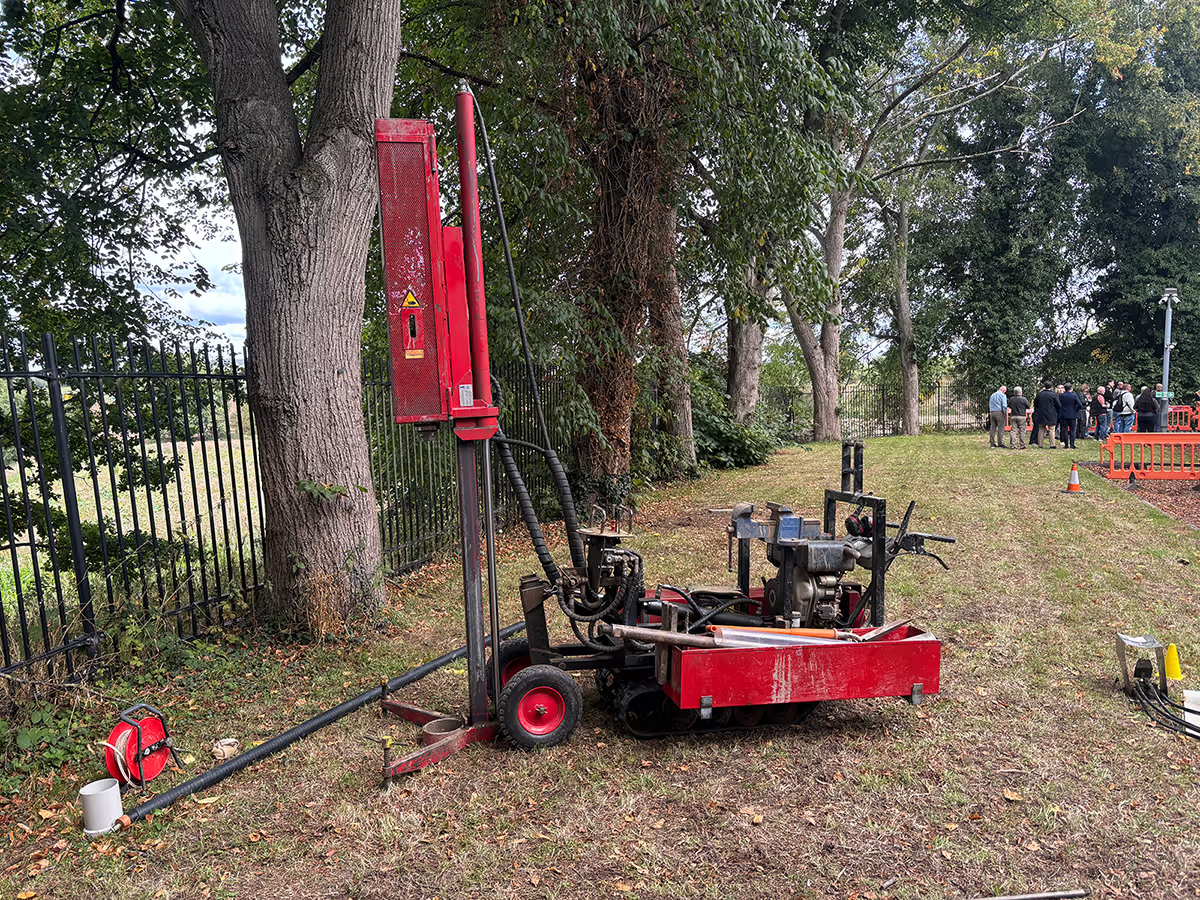
Anchoring avoids most of that. The work is normally done from the front of the wall, so the ground behind it can stay where it is. It's generally quicker and more economical than a rebuild, and it needs a much smaller working area. Our mobile compact drilling and driving equipment can reach sites that bigger machinery can't.
You also keep the wall you already have. That matters a great deal with historic structures, where the original fabric is worth protecting, and our heritage consultancy team can help on sensitive projects. Keeping and strengthening a wall also cuts out much of the material, waste and embodied carbon that comes with starting again. And because every anchor is load-tested, you know it's doing its job rather than hoping it is.
We should be upfront about one thing, though. Anchors are there to hold a wall in place and stop it moving any further. They won't normally pull a leaning wall back upright. If a wall is in poor condition, it may also need masonry repairs, better drainage or partial rebuilding alongside the anchors.
How We Design and Install Retaining Wall Anchors
No two retaining walls are the same, so we design every anchor scheme around the site in front of us. Here's how a typical project runs. We start by inspecting the wall. Our engineers record its condition, measure any movement and work out what's causing the problem.
Next, we need to understand the ground. A geotechnical investigation tells us about the soil or rock, the groundwater and how strong the ground is. Without that information, it simply isn't possible to design an anchor properly.
With the investigation complete, we design the scheme in-house by our own structural engineering team. That covers the type of anchor, its length, spacing and angle, the load it needs to carry and how that load will be spread across the wall. Then our team installs the anchors, taking care to keep disruption to your property and neighbours to a minimum. Finally, every anchor is tested to confirm it carries its design load before we sign the work off.
If the anchors need to run under a neighbour's land, you'll usually need their agreement before work starts. We'll flag this early on, and our party wall surveys team can help if boundary issues need to be resolved.
Speak to Our Engineers About Retaining Wall Anchors
If your retaining wall is leaning, cracking or bulging, it pays to get advice early. A problem caught now is almost always easier and cheaper to put right than one left to get worse. Our structural and geotechnical engineers assess retaining walls across the UK, and we design and install ground anchor solutions for homes, businesses and infrastructure. You can also find out more about our landslip and retaining wall services.
Give us a call on +44 (0) 1527 579933, email engineers@shire-uk.com, or send us a message through our contact form, and one of our team will be happy to talk through your project.
Contact Our UK Structural Engineering Experts
Get in touch with our trusted structural engineering consultants and experts to discuss your project and see how we can help.
If you're looking to start a structural engineering project or would like a team of structural engineering consultants to support you, Shire is here to help.
Explore our other news articles for updates on industry developments, company announcements and further insight into our structural engineering services.
Resolving Subsidence and Foundation Stabilisation - The Shire Perspective
May 26, 2026
In most cases, targeted, minimally invasive measures such as drain repairs, resin injection, or ground improvement are all that's needed to achieve lasting stability. Foundation stabilisation and underpinning are reserved for situations where engineering evidence genuinely demands it.
Why Ground Anchors Are Critical for Slope Stability and Retaining Wall Support
March 11, 2026
Ground anchors are cost-effective, versatile, and durable, offering long-term security with minimal disruption to the surrounding area. Whether your project is residential or commercial, Shire UK specialises in providing reliable ground anchor solutions tailored to your needs.
The Importance of Hiring Structural Engineering Consultants for Subsidence & Insurance Claims
January 13, 2026
Our expert structural engineering consultants provide accurate assessments, reports, and solutions for subsidence and insurance claims, ensuring your property’s safety and long-term stability.
Over time, we have added a wide variety of services to our offering including Geotechnical investigations, structural repair services, telecommunications design services, product innovations and foundation systems to name a few. Contact our structural engineers today to discuss your project or challenge.
At Shire, we provide a range of practical structural engineering solutions to suit different project challenges, including piled raft foundations, structural jacking, retaining walls and other specialist systems. Each solution is developed to respond to site conditions, structural requirements and programme constraints, delivering safe, cost-effective outcomes while minimising disruption