Shire was appointed to design and build a piled raft underpinning scheme after a newly built home was found to be sitting over ground that it simply wasn’t built to handle.
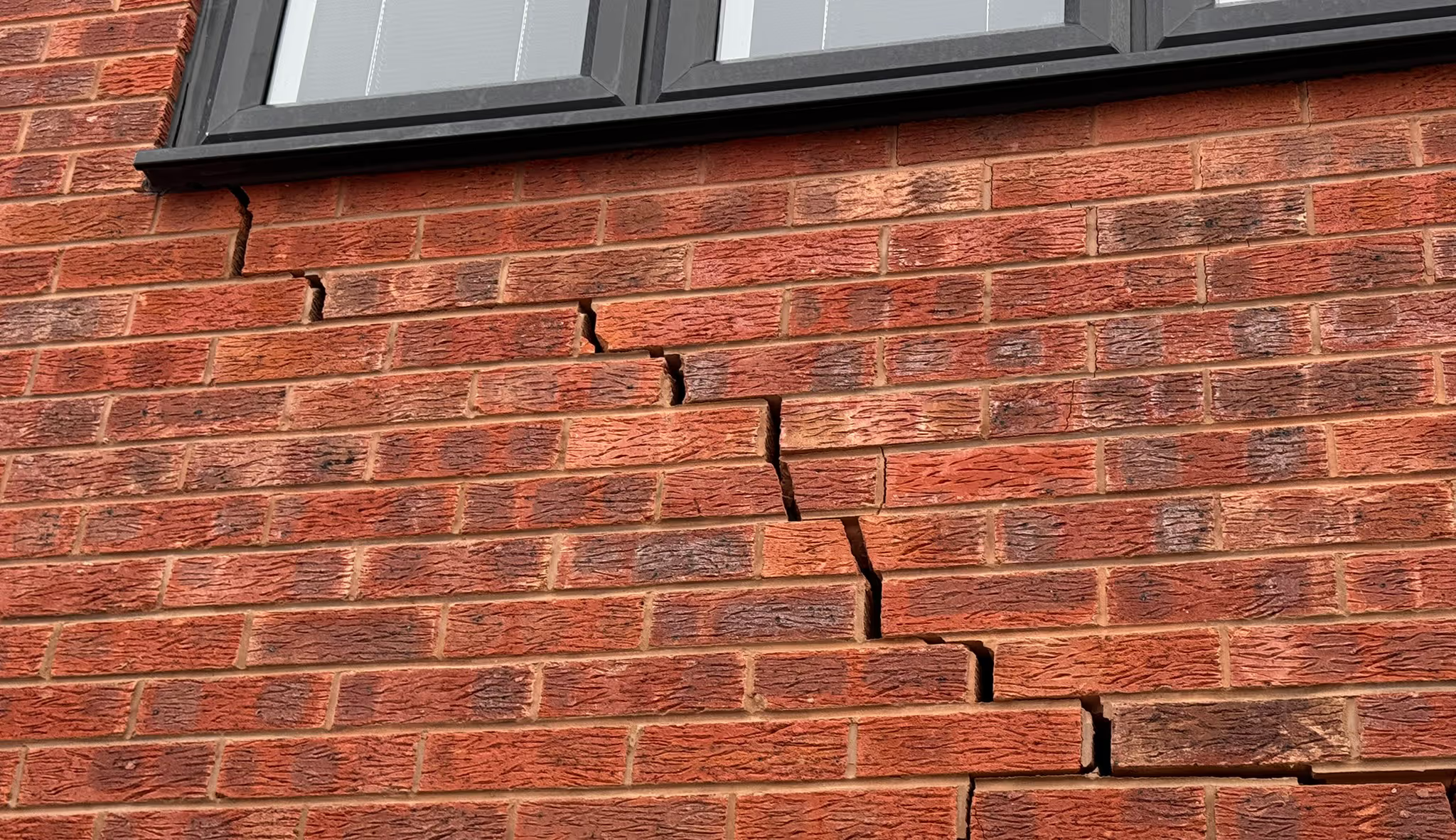
After construction was completed, a survey revealed a serious problem beneath the property: the building had been founded on traditional concrete strip foundations directly over loose backfill material left behind from a deep sewer trench. Strip foundations aren’t designed to cope with voids or compressible ground at depth, meaning the home was at real risk of differential settlement, cracking, and long-term structural damage if nothing was done.
The Challenge
The existing foundations were shallow, and the ground beneath them couldn’t be trusted. With a homeowner living in the property and a housebuilder needing a swift, reliable fix, there was no room for half-measures.
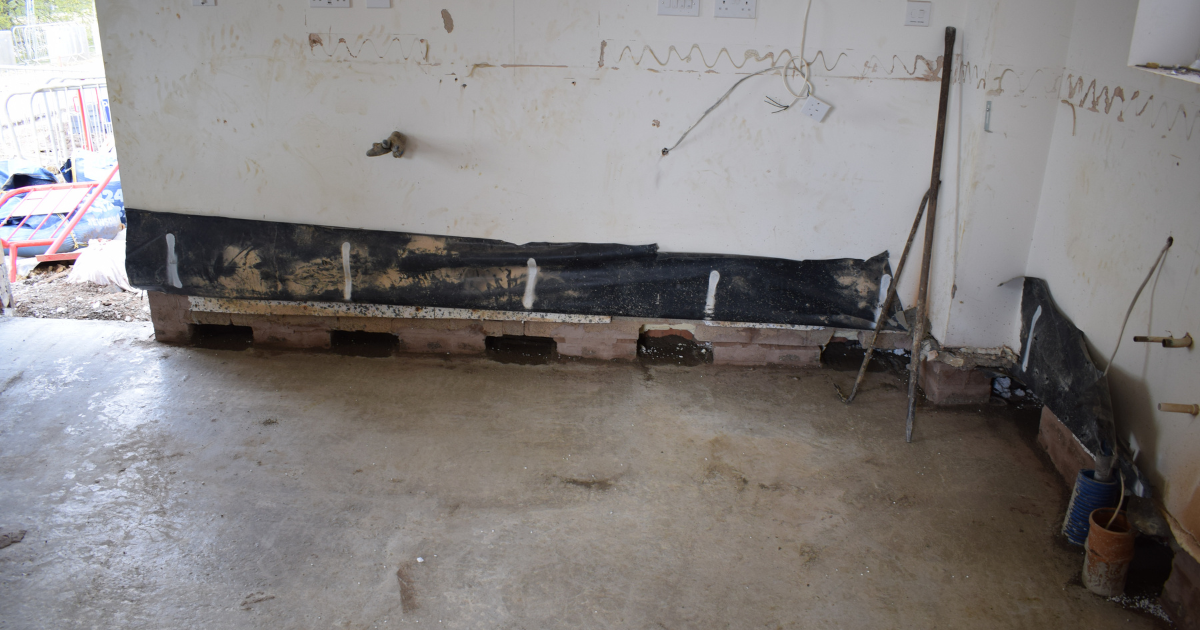
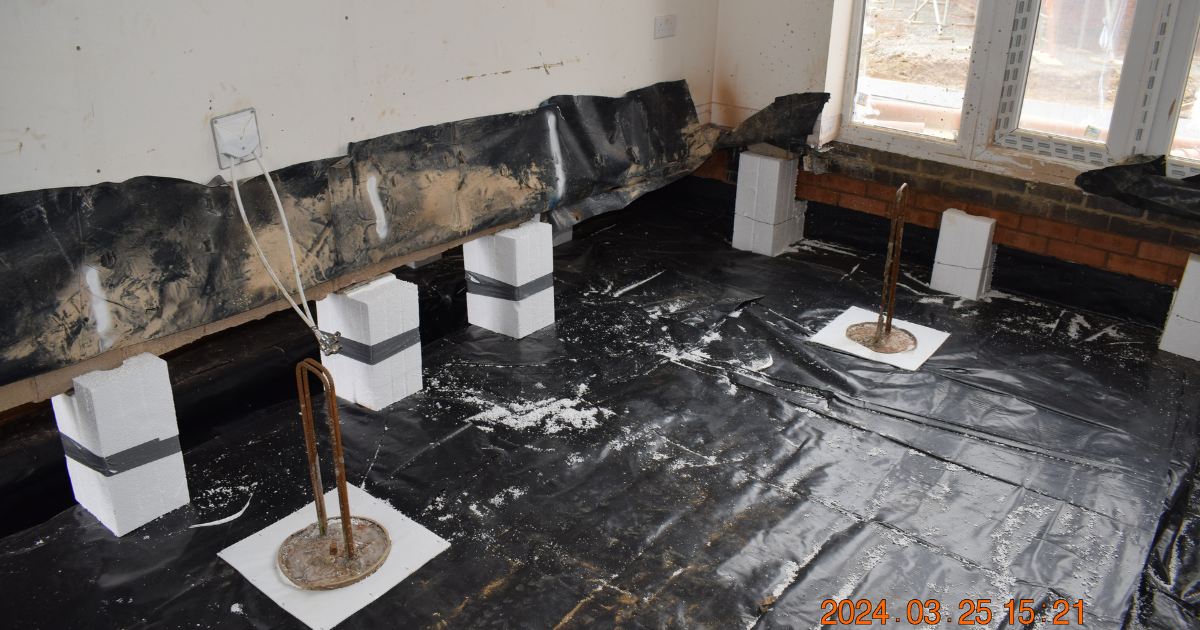
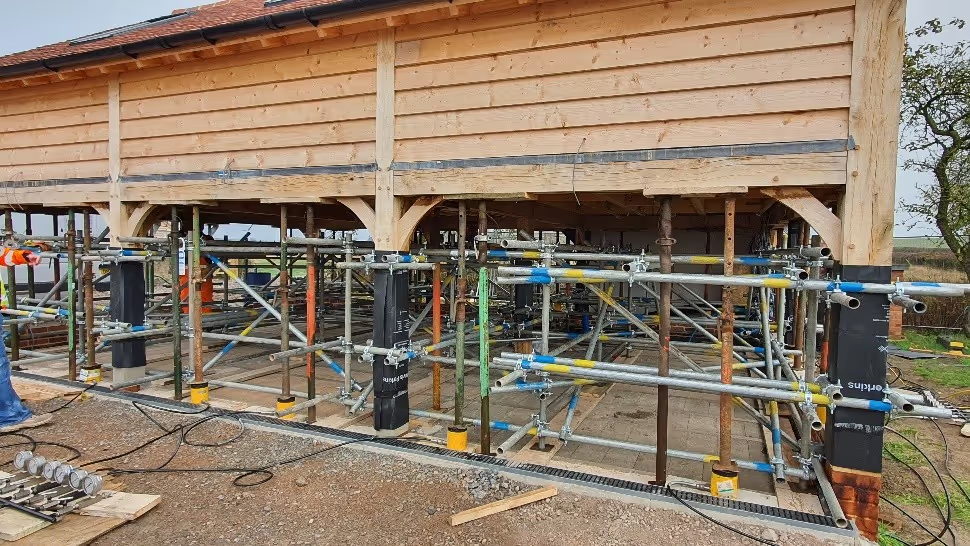
Before any permanent work could begin, the building had to be carefully propped up using temporary steel stools and reinforced concrete padstones, effectively holding the house up while the inadequate foundations were broken out and replaced. It’s the kind of work that requires precision and experience; get it wrong, and the consequences are significant.
The Solution
Shire took on the full design and build, handling everything from the initial soil investigations through to obtaining the required building notices and authorisations.
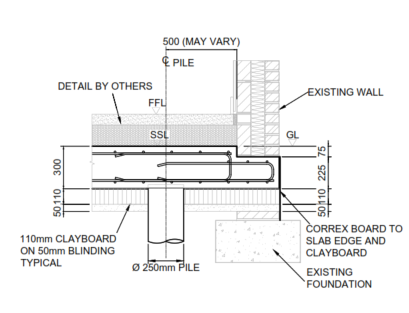
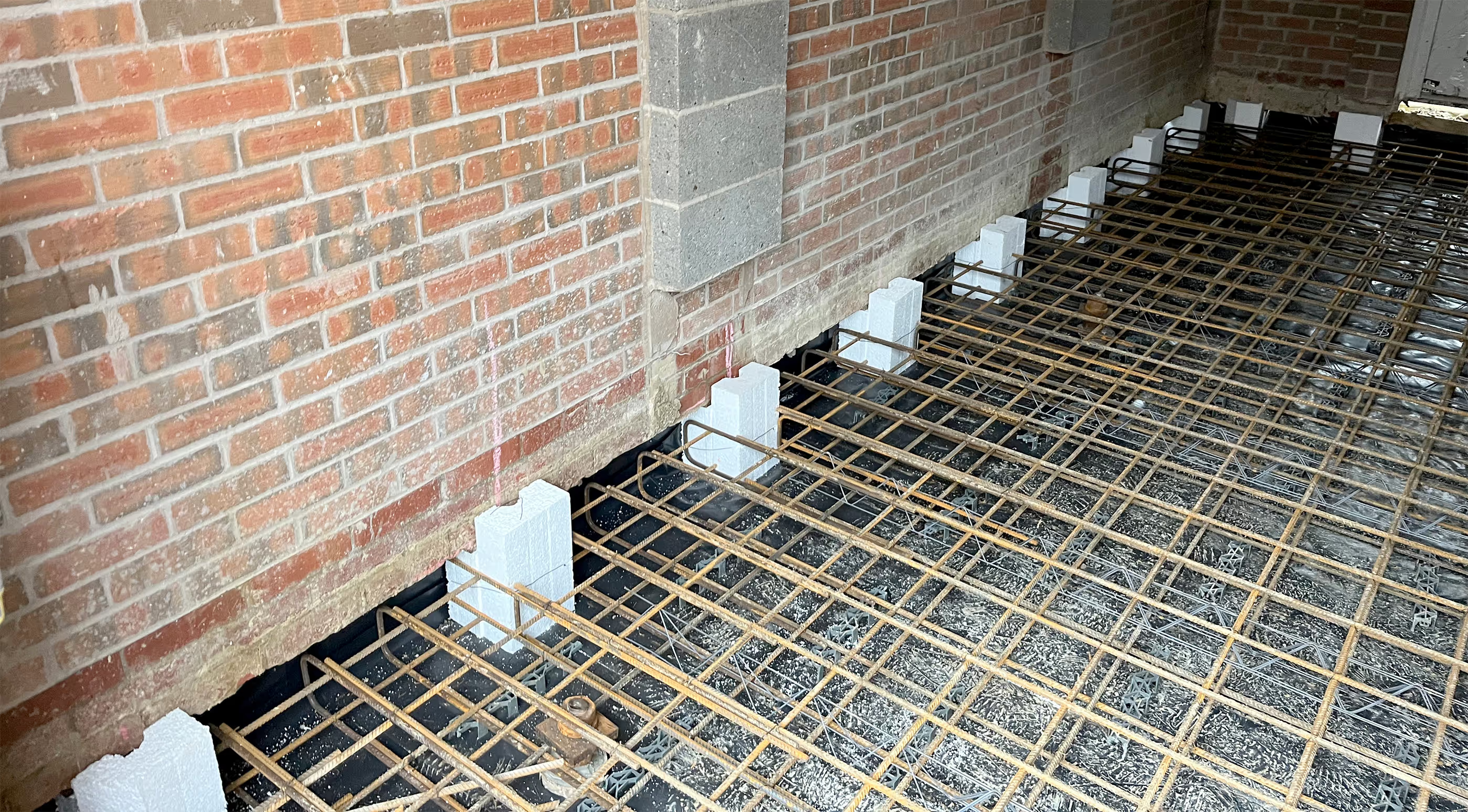
The solution was a 300mm thick reinforced concrete raft slab, covering 60m², installed on 250mm diameter open augured piles drilled to depths of up to 12 metres, reaching well below the problematic backfill into competent bearing ground. The raft effectively bridges the weak zone, spreading the load of the building across stable material at depth.
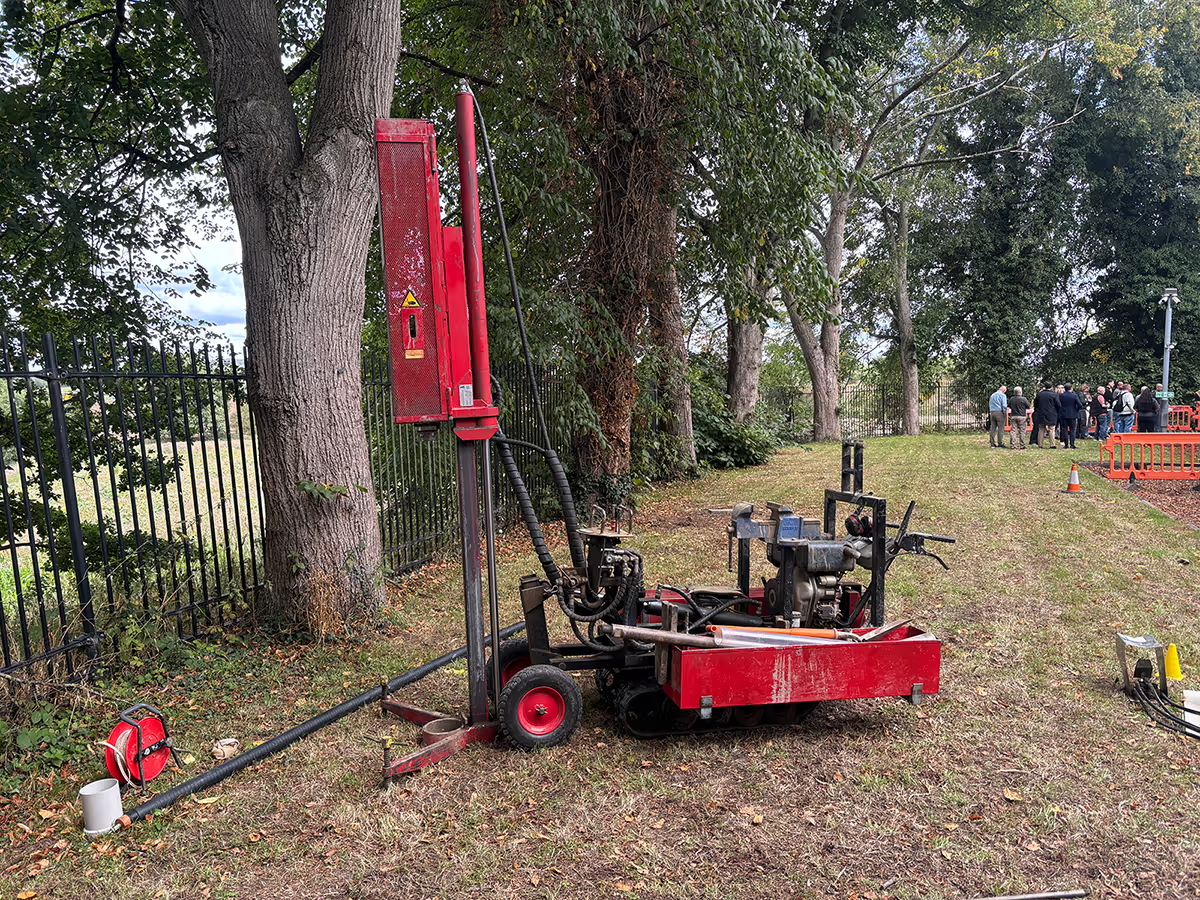
Because heave, upward ground movement, was also a risk, the design incorporated 160mm of clayboard anti-heave protection laid over 50mm of sand blinding, with full-depth reinforcement throughout the piles. To underpin the design with real data rather than assumptions, Shire commissioned a 15 metre borehole investigation to give a precise picture of what was going on beneath the surface.
Keeping the Drains in the Picture
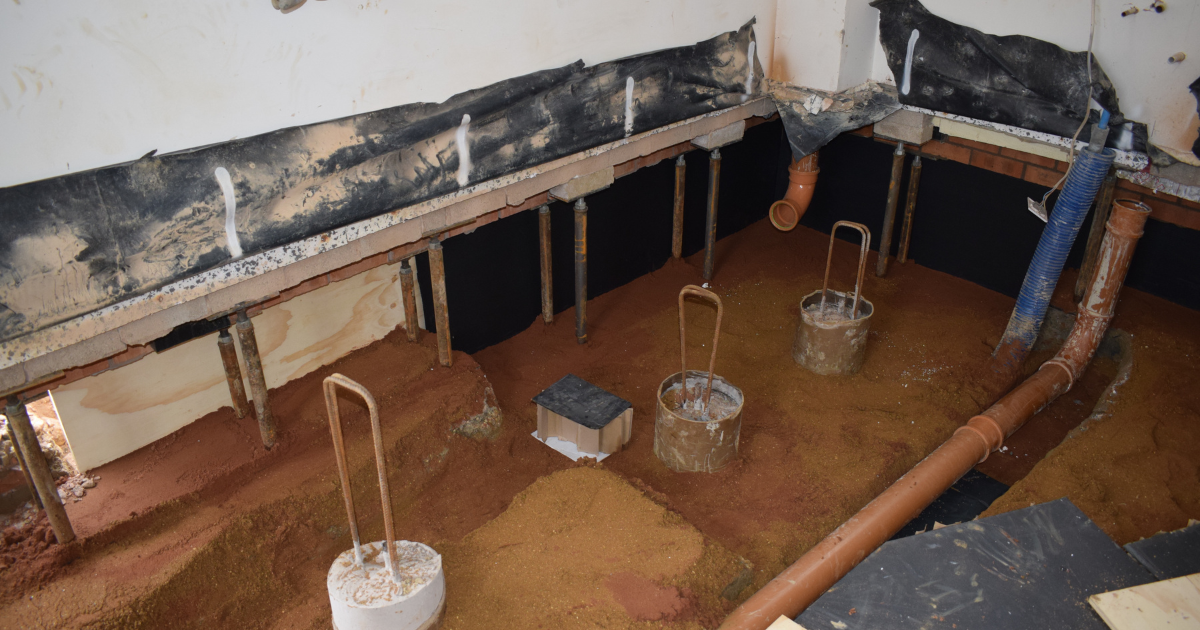
One complication that required careful thinking: the underground drainage ran directly through the anti-heave zone beneath the raft. Simply pouring concrete around it wasn’t an option; the pipe needed to stay functional, supported, and running at the correct gradient.
Shire’s solution was to trench around and beneath the drainage run, form a mass concrete surround, and then install the anti-heave material below the reinstated pipe. The drainage was then suspended using hangers fixed directly to the raft slab reinforcement, keeping it properly supported and at the right fall throughout the pour. It’s one of those details that looks straightforward on paper but takes real coordination to get right on site.